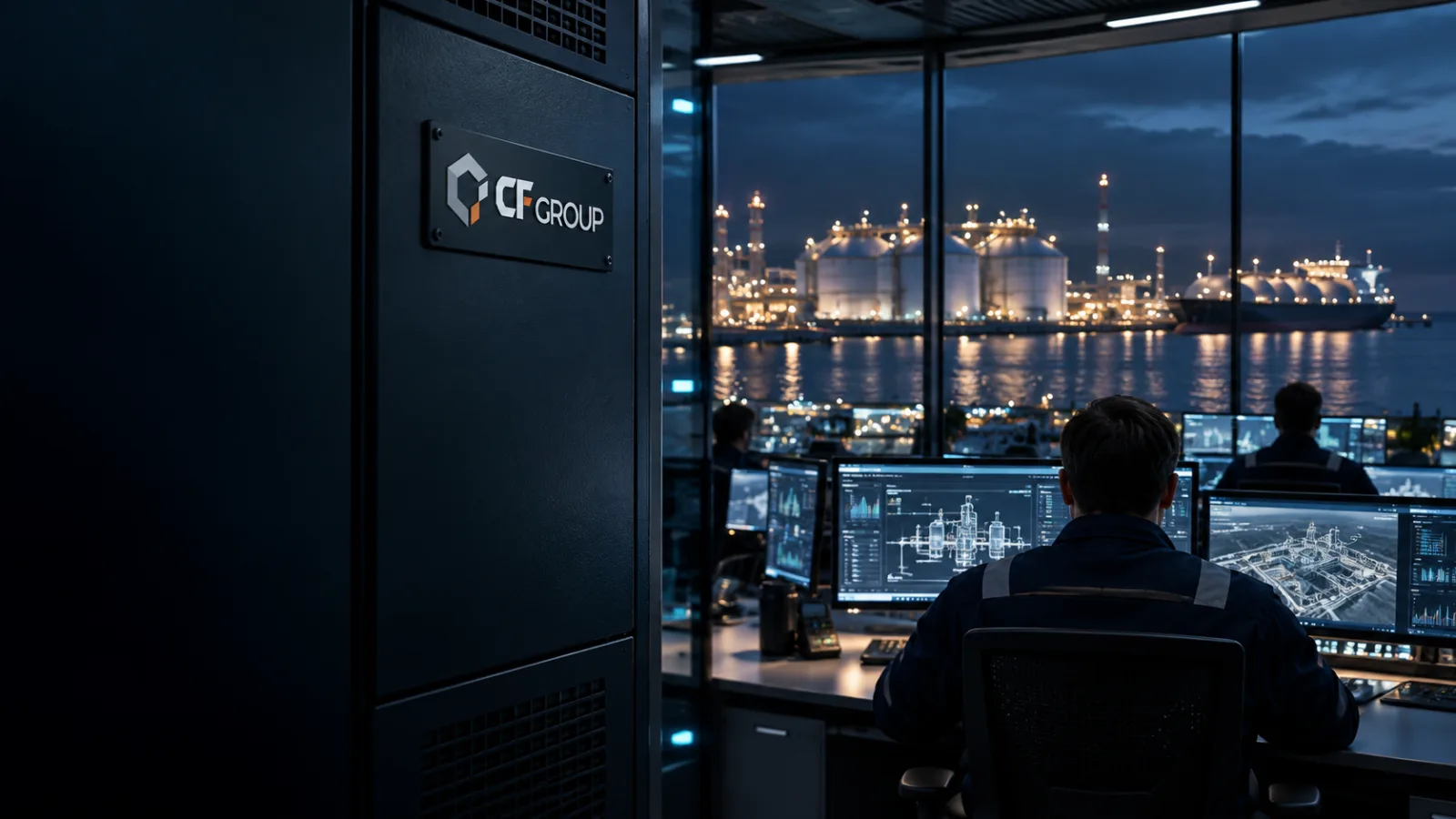
In gas logistics equipment can belong to many owners: the cargo owner buys its own tanks, an international lessor supplies ISOs, the operator invests in the core. If each owner tracks its tanks differently, the dispatcher ends up working by phone and spreadsheet.
Data follows the tank, not the tank's owner
Inspection records, cleaning history, location, level, pressure and swap schedule must sit on one platform regardless of who owns the tank. The cargo owner sees where its product is; the operator sees the whole fleet; the lessor sees the condition of its assets. This is how global tank operators run fleets of tens of thousands of tanks without owning them all.
MQ ICT — already in place, not built from scratch
GasTwin™ is not software ordered from outside. MQ ICT Solutions, a CF Group member, reports on cfg.vn more than 500 projects at home and abroad, 62 customers in 8 countries, 2 algorithm patents and 10 in-house products in real-time monitoring with AI, IoT and big data. CF Energy's problem — tank-level sensors, location telemetry, consumption forecasting, swap scheduling — sits squarely inside that capability.
Why customers find it hard to leave
- Operating history, inspection records and consumption data accumulate year on year; changing supplier means starting again.
- The portal and electronic documents are tied into the plant's internal processes.
- Consumption forecasts get more accurate the longer they run — value rises with time, not falls.
Does your gas logistics supplier let you see tank levels in real time? If you have to phone and ask, nobody is holding the data yet.