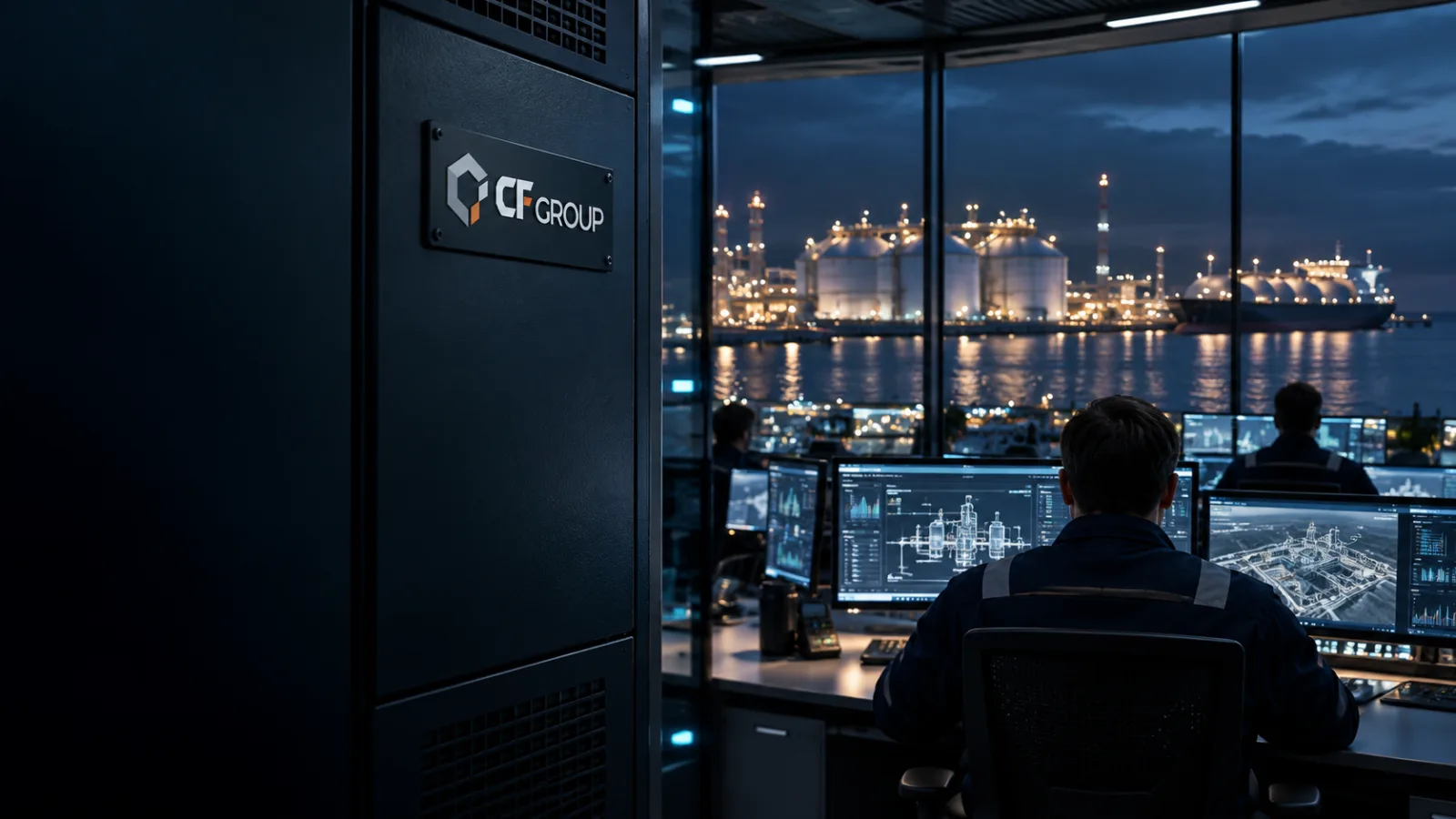
Telemetry is not there to add another screen. It is there to give the operating team enough time to act before the tank falls below a safe level.
Five minimum data fields
- Level or estimated remaining mass.
- Consumption rate and trend by shift.
- Equipment status, alarms and signal quality.
- ETA of the next tank and trip status.
- Scheduling, confirmation and emergency thresholds.
Sensor data must travel with business data. Knowing the tank is at 35% is not enough without knowing whether load is about to rise or where the next truck is. Equally, truck GPS does not help decide when actual consumption differs from plan.
From forecast to action
Every alarm needs an owner, a response time and an escalation path. For example: forecast hits the scheduling threshold in 18 hours; dispatch confirms a tank within two hours; if the ETA misses the window, the system switches to the back-up plan.
A digital twin must track real operations
Hoa Tieu Logistics separates BIM, simulation and digital twin by the question each tool answers. In gas logistics a model only becomes an operating tool when real status is updated and leads to decisions that can be checked.
Late alarms, consumption-forecast error, ETA accuracy and on-time swap rate — these matter more than the number of charts on the screen.