Vietnam has had a green-energy transition programme for transport since 2022 and is drafting an emissions-reduction roadmap for its fleet. The practical question for a vessel owner is not "is LNG cleaner" but "where does my vessel bunker, how often, and who is responsible if something goes wrong".
Three vessel groups, one thing in common: back in port regularly
- Offshore fishing vessels with high power, long trips, and fuel as the biggest cost of the voyage. A dual-fuel retrofit keeps the diesel engine and adds an LNG system — and needs LNG available at the fishing port they normally call at.
- Bay tour boats on short routes, fixed schedules, back in port every day, operating in areas sensitive for the environment and tourism image. One bunkering point serves the whole fleet.
- Coastal vessels and river–sea barges with fixed end points, bunkered at both ends of the route.
All three return to port on schedule. That is what makes bunkering by port cluster possible, instead of building scattered stations waiting for vessels.
By port cluster, not everywhere
The rule in every vessel fuel-switch programme worldwide: infrastructure follows the number of vessels, it does not go ahead of them. A fishing-port cluster with enough high-power vessels working many days a year justifies a station; where there are not enough, ISO T75 tanks serve as mobile buffer with truck-to-ship bunkering, upgraded once volume proves itself.
Where CF Energy stands
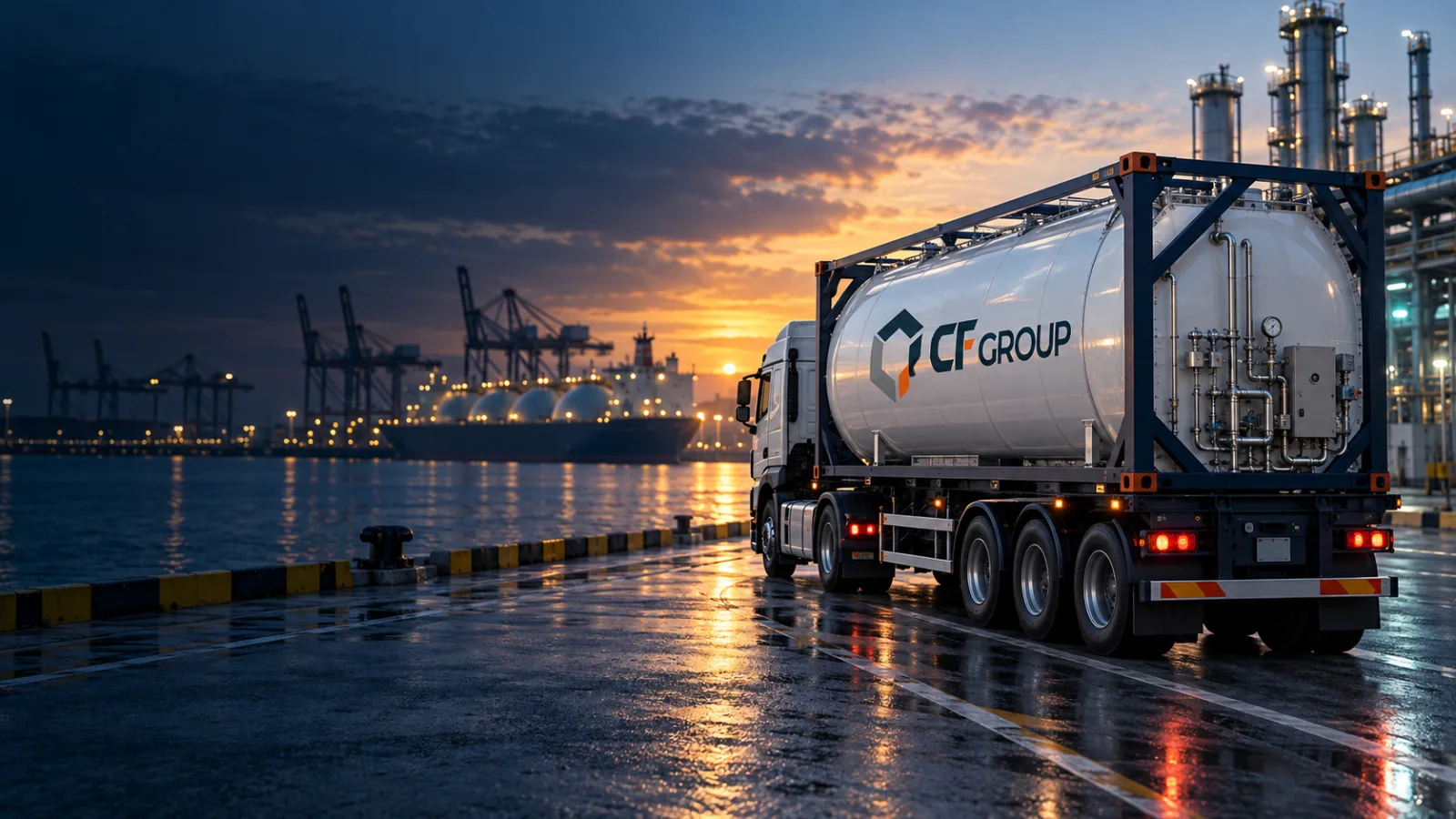
- Supply: ISO T75 from the import terminal to fishing-port clusters, tourist piers and coastal ports — by road, sea and rail.
- Bunkering: a quayside station or direct ISO-to-ship transfer, with safety procedure, emergency shutdown and gas detection.
- Engineering and files: vessel survey, tank space, ventilation, fire safety; coordination with the registry and retrofit technology partners.
- Data: GasTwin™ logs diesel, LNG, engine hours and route per voyage — the base for green credit and carbon credits.
CF Energy does not build vessels, does not install engines and does not sell gas. Those three belong to certified yards, technology suppliers and LNG cargo owners. Staying in its lane lets CF Energy work with every party.
What CF Group already has for this
- The same ISO tank fleet and depots that serve plants on land — no separate investment for vessels.
- Long River operates port equipment; Nam Duong runs river–sea barges in the North — both ends of the bunkering problem are staffed.
- MQ ICT already has real-time measurement and monitoring capability for MRV.
The climate benefit of marine LNG must include unburned methane. So measured data on board — not theoretical factors — is what decides whether a programme deserves to scale. That is also why CF Energy puts MRV inside the service scope from day one.